%20--%3e%3csvg%20version='1.1'%20id='Layer_1'%20xmlns='http://www.w3.org/2000/svg'%20xmlns:xlink='http://www.w3.org/1999/xlink'%20x='0px'%20y='0px'%20viewBox='216.1%2082.4%20368.5%20368.5'%20style='enable-background:new%20216.1%2082.4%20368.5%20368.5;'%20xml:space='preserve'%3e%3cstyle%20type='text/css'%3e%20.st0{fill:%23FFFFFF;}%20.st1{opacity:0.2;}%20.st2{opacity:0.2;enable-background:new%20;}%20%3c/style%3e%3cg%3e%3cg%3e%3cg%3e%3cpath%20class='st0'%20d='M360.8,255.4c5.8,1.5,11.2,2,17,2c31.6,0,63.7-19,68.5-53c3.4-19-4.4-41.8-26.2-41.8%20c-21.4,0-34.5,19.9-37.9,38.9l-0.9,5.8h-68.6c6.8-57.4,59.8-102.6,117.2-102.6c58.4,0,94.8,43.7,85.6,102.1%20c-7.8,46.7-45.2,87.1-91.9,97.7l-10.7,45.7h-66.6L360.8,255.4z'/%3e%3c/g%3e%3cpolygon%20class='st0'%20points='332.4,434.3%20339.2,390%20408.7,390%20399,434.3%20'/%3e%3c/g%3e%3cg%3e%3cg%20class='st1'%3e%3cpath%20d='M352.2,247.8c5.8,1.5,11.2,2,17,2c31.6,0,63.7-19,68.5-53c3.4-19-4.4-41.8-26.2-41.8c-21.4,0-34.5,19.9-37.9,38.9%20l-0.9,5.8h-68.6C310.9,142.2,363.9,97,421.3,97c58.4,0,94.8,43.7,85.6,102.1c-7.8,46.7-45.2,87.1-91.9,97.7l-10.7,45.7h-66.6%20L352.2,247.8z'/%3e%3c/g%3e%3cpolygon%20class='st2'%20points='323.8,426.7%20330.6,382.4%20400.1,382.4%20390.4,426.7%20'/%3e%3c/g%3e%3c/g%3e%3c/svg%3e)



by Harper Tabb
The 2024 Summer Olympics and Paralympics are descending on Paris this month, which has caused me to reflect on Australian sport as a whole, esports on a national level, and how it all compares to Australian Counter-Strike in particular.
To get a bit of an elephant out of the gymnasium room, I won’t be discussing here any esports Olympics, such as the IOC-endorsed (and somewhat maligned) Singapore event last year, or the more recently announced Olympic Esports Games in Saudi Arabia. Though it is worth noting, the Olympics are heavily steeped in certain ethos and traditions, particularly amateurism, equal-access to qualifying and national representation, that make it seem like there will be a fair way to go before we get something we are familiar with as esports fans appearing at the Olympics.

Instead, I want to talk about something we focus on when we watch our favourite athletes in the swimming pool, or our favourite players on the major stage: how somehow, despite our isolated island continent far away from most of the rest of the world, we usually out-perform expectations and circumstances given to us.
So enough beating around the bush. What does this have to do with Counter-Strike?
Well, the general consensus among our community has been that we are in a major decline as a scene. Some of that is financial with the esports boom finally crashing down, some of that is less tournaments, some of that is less players.
But I argue we are far better off than we appear.
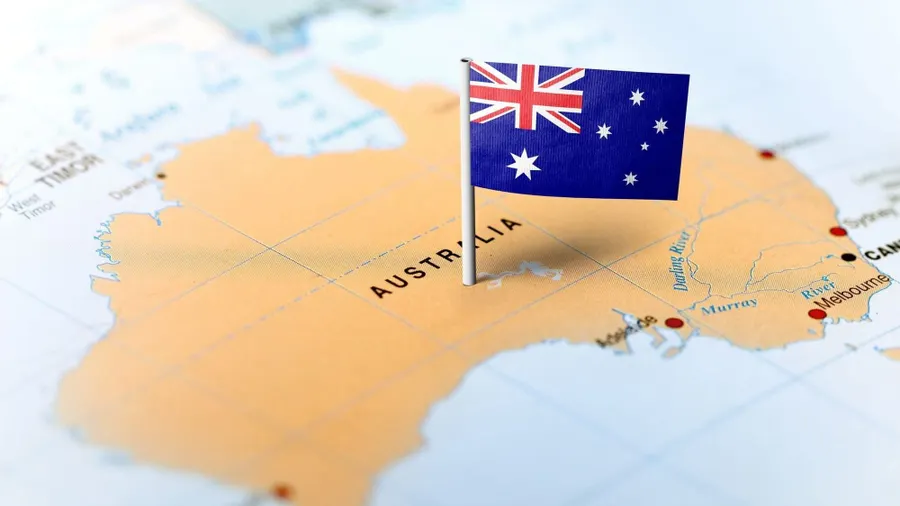
To start, we have one obviously significant disadvantage: we cannot play online against any other regions except New Caledonia, New Zealand and surrounding islands. Oceania has a population of approximately forty-six-million people, with thirty-one-million coming from Australia and New Zealand alone. It’s difficult to get new ideas in an echo-chamber. Just ask any of FlyQuest, Bad News Kangaroos and the like, they will tell you the European trips are invaluable. For context, the average pugger in Germany can play with up to fourty-four other countries fairly easily. Here is a random Faceit lobby I got of Iceland’s highest ELO player, to further extend upon my point. Seven countries are in this lobby (presuming there are no fake-flaggers). Seven different cultures. Seven subtly different ways of playing the game.
Hell, Perth players will even argue that their ping is difficult to play on at times. We barely manage having two countries on our servers.
But I would like to raise an interesting statistic: Australia and New Zealand are some of the best countries in the world for Olympic medals per capita. It is within our national identity to overcome the odds and put it all out on the field (just ask Steven Bradbury), and when talking about international competition, we are always proud of our athletes who challenge the top dogs and give them a run for their money, medal or not. Ask the Matildas, Matthew Mitcham, Ariarne Titmus, Rowan Crothers, you name it, but many of these athletes who come from thousands of miles away from their competitors, who sometimes aren’t even competing in a sport Australia is recognised as being elite in, I’d be willing to bet they’d claim that it can be a strength to come from obscurity and adversity. At the very minimum, it makes it just that little more rewarding.
Even in CS, we still manage to bring world-class competitive teams despite our disadvantages. FlyQuest are making playoff runs, the Berlin major run of Renegades still lives in the heart of every Aussie fan, and we all just became Team Liquid fans to follow the golden child, Justin “jks” Savage on his next adventure.
Been a while but I'm happy to be back and excited to be apart of this team! Thank you @TeamLiquidCS for the opportunity 🫡 https://t.co/N0o0kmlFBp
— jks (@jks_CS) July 12, 2024
Now, obviously I’m not the first person to claim that being in Europe probably helps your Counter-Strike career. But it leads to my next point: opportunity.
Anyone inside Australia’s esports sphere will tell you that it is small, and that is true. But there are benefits to it being small.
It is much more personal, and there is a big community feeling that is similar to something you may find at a footy oval on a Saturday morning. People who play in Europe may be battling away in the realms of ESEA Advanced are not rewarded the same level of recognition and opportunity as someone of a similar level in Oceania.
I am personally grateful for the opportunities I have received in esports, and many come down to the small-town feeling that everyone is approachable, easy-going, and are eager to be involved. This goes outside the realm of players too, with casters, organisers and the like all similarly enthusiastic to make Australian CS look as good as it can be. I’m not sure I could say the same thing in a place like Europe that is a lot more cut-throat.
For what it’s worth, this isn’t to claim that we couldn’t have it better. There are definitely benefits to our corner of the world, but it definitely comes with drawbacks that have been discussed plenty prior to now and I can assure will again. But it doesn’t have to mean it has to be this way forever, and our Olympians show us that making excuses and turning around when faced with obstacles won’t get us anywhere. We can do it far away from the rest of the world like Bradbury, we can do it with few predecessors in our scene like Mitcham, we can even do it while still working the aisles at Woolworths like Riley Day.
So unless we decide to invent our own code of esport like we have with football, so that we can have a monopoly on it to be the best in the world, maybe we should work with what we’ve got and turn our isolation and competitive spirit into a strength like our elite athletes do. Engage with the scene, be the change you want to see, and not unlike the Olympics, occasionally watch a random event at 3 AM that you’ve never cared about before just because an Australian is in it.